2026-01-20
Kaomoji vs Emoji: What's the Difference (and When to Use Each)
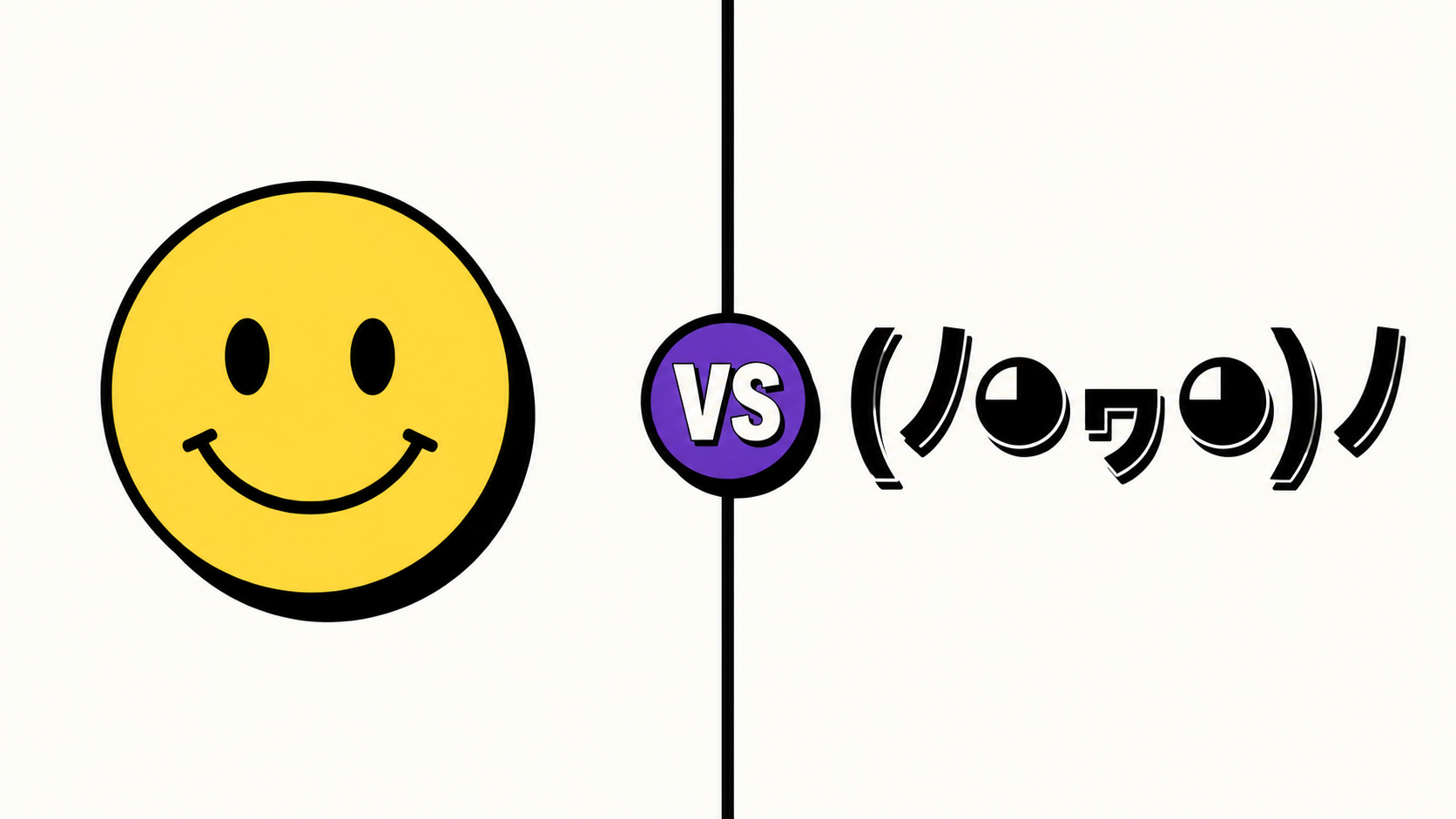
Emoji are pictures. Each one — 😀, 🔥, 💀 — is a single Unicode character that's rendered as a small image by your device's font, the same way a letter is rendered as a shape. Because the rendering is up to the platform, the same emoji can look noticeably different on an iPhone, a Samsung phone, and Discord.
Kaomoji are typography. (。◕‿◕。) isn't one character — it's a small arrangement of ordinary text characters (parentheses, letters, punctuation) composed to look like a face. Because it's built entirely from plain text, it renders identically everywhere, in any font, on any device old or new. There's no image to fail to load and no platform-specific redesign to worry about.
That difference in how they're built leads to a real difference in how they're used. Emoji are fast — one tap from a picker most people already have muscle memory for — and instantly recognizable at a glance, which makes them great for quick reactions and scanning a chat. Kaomoji take a little more intention (or, more realistically, a copy and paste from somewhere like this site), which is exactly why they tend to read as more personal or expressive: someone chose ¯\_(ツ)_/¯ specifically, rather than tapping the first shrug-adjacent option in a grid.
There's also a tone difference worth knowing. Emoji have become the default punctuation of casual digital conversation — a 🙂 at the end of a message softens it, a 😭 signals "this is funny," and most readers process the meaning instantly without thinking about it. Kaomoji carry a distinct aesthetic on top of the emotion: they read as a little more deliberate, a little more "internet culture," and often more expressive of a specific mood than the closest matching emoji would be. A single 😢 says "sad." (╥﹏╥) says sad in a way that feels like it's really committing to the bit.
In practice, most people end up using both, for different jobs: emoji for quick reactions embedded in a sentence, kaomoji for a standalone expressive moment — a bio, a status, a comment that's meant to be noticed. Neither replaces the other; they're just different tools built out of different materials.
Frequently asked questions
Do kaomoji work on every device?
Yes — since a kaomoji is just an arrangement of ordinary text characters, not an image, it renders identically in any font on any device, old or new. There's nothing that can fail to load the way an emoji's picture occasionally can.
Can I make my own kaomoji?
Yes — our kaomoji maker lets you build one from a library of eyes, mouths and arms instead of picking a pre-made face, which is handy when you want something more specific than the standard set.
Which one should I use in a bio?
Kaomoji tend to fit a bio or status better, since they read as more deliberate and personal, and a standalone expressive moment is exactly what they're built for. Save emoji for quick reactions inside a sentence, where speed and instant recognition matter more.